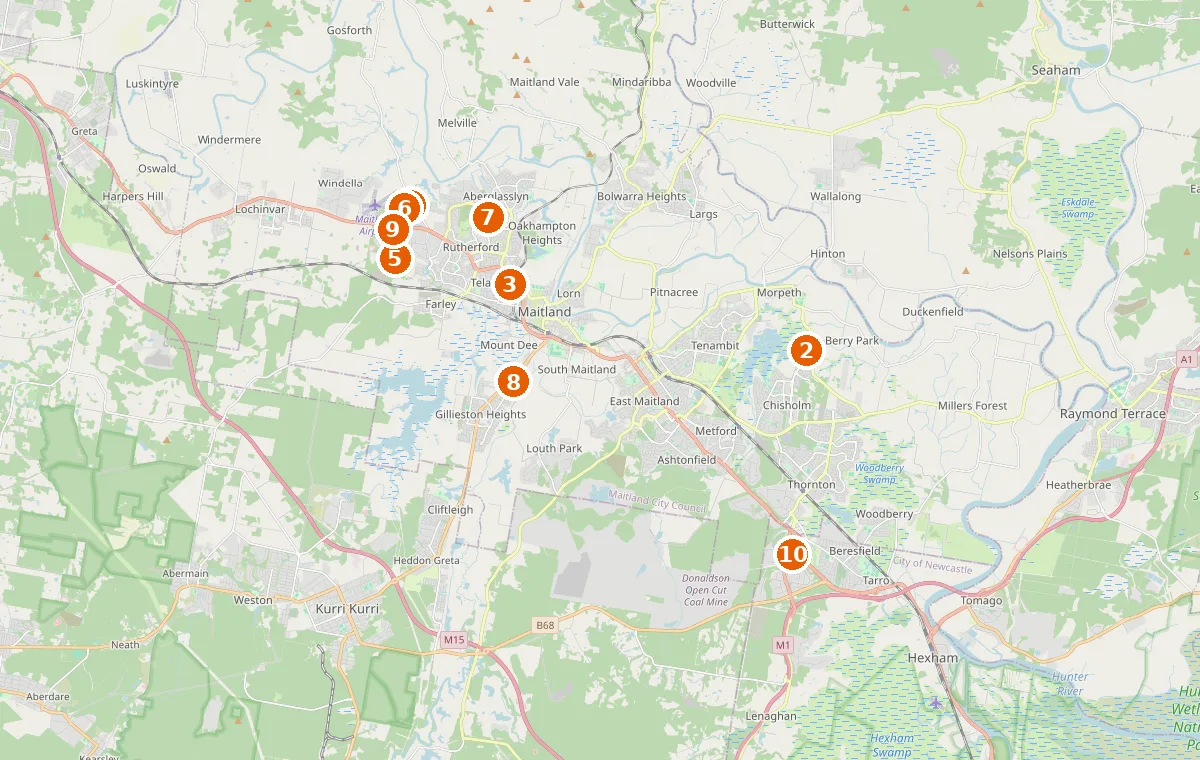
Looking for a electrician in Maitland? These are the ten local electricians with the strongest Google reviews. We ranked them on their rating and on how many reviews back it up.
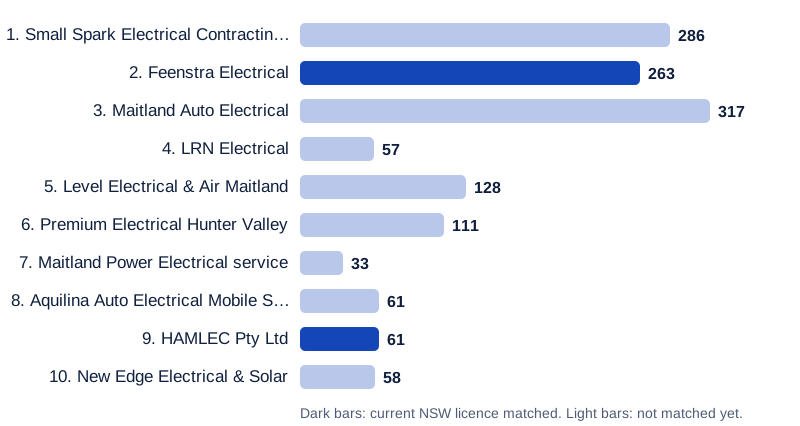
How many Google reviews back each rating on this list, read 29 October 2026.
Why it counts. A perfect score from a few reviews is a start. A strong score from a hundred is a track record. Our order gives the track record more weight.
The ten best-reviewed electricians in Maitland
Scores were read on 29 October 2026. Ratings move, so check the Google profile before you call.
Our view. These are busy, well-reviewed businesses: three of the ten have more than 250 reviews each. Two hold a licence we could match by name on the NSW register, so ask the others for their licence number and check it before any work starts.
What a licensed electrician must do in NSW
Any electrical wiring work in NSW needs an electrical licence or certificate, whatever it costs and whether the job is in a home, a shop or a factory (NSW Government, electrical work).
Doing it without one breaks the Home Building Act 1989, and the fines are up to $22,000 for a person and $110,000 for a company.
After the work, your electrician has two jobs on paper:
Test the work. The installation has to pass a safety and compliance test before it is switched on.
Lodge a certificate. Licensed electricians must submit a Certificate of Compliance for Electrical Work, called a CCEW, through the Building Commission NSW portal no later than 7 days after finishing the work and the test (NSW Government, when to submit a CCEW). That applies even to like-for-like swaps of a water heater, an oven, a stove top or a power point.
The catch. Lodging a CCEW is the electrician's job, but nothing stops one being forgotten. If you have not received it within a week or so of the job, ask.
Ask for it. A CCEW can help with warranty claims on whatever was installed, and a buyer or insurer may ask for it later.
Jobs you should never do yourself
DIY electrical work is dangerous and illegal in NSW.
The state's own safety advice says that unless you are a qualified electrician you should never wire any part of your property, install or move power points, lights or switches, or install a ceiling fan (NSW Government, electrical safety in the home). The only electrical maintenance a homeowner should do is change a light globe. Faulty DIY work can also void your home insurance.
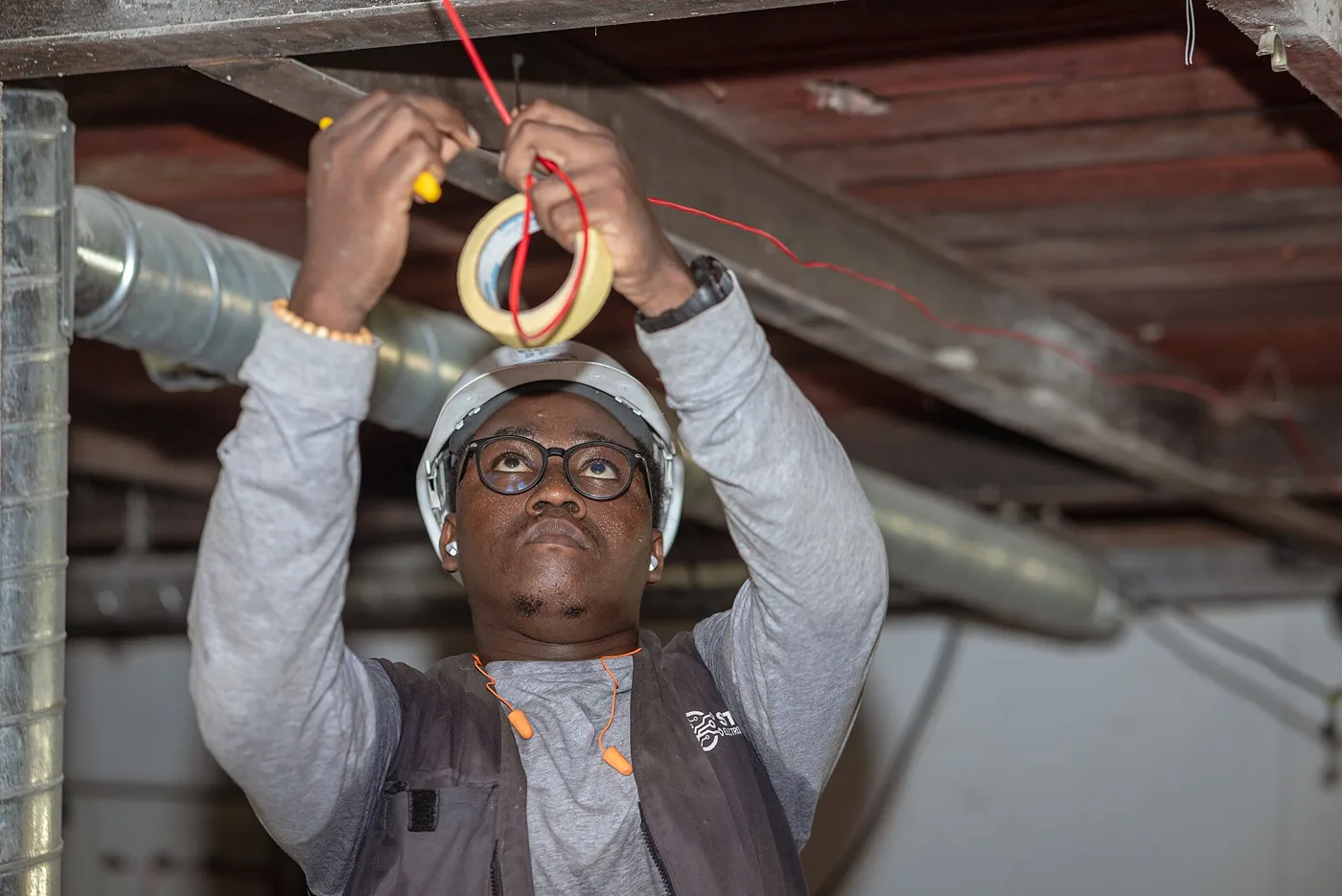
An electrician running cable overhead. Even a like-for-like swap needs a compliance certificate in NSW. Photo: Sid Mbog, CC BY-SA 4.0
A safety switch watches the current on a circuit and turns the power off in a fraction of a second if it leaks, which protects you from a serious electric shock.
Homes built during or after 2000 usually have safety switches. In an older home, the NSW Government strongly recommends asking a licensed electrician to check. Once you have them, test each safety switch twice a year using the test button on the switchboard.
If your Maitland home is older and has never had its wiring checked, ask for an inspection before you add a new kitchen, an air conditioner or solar panels, because each one puts more load on old circuits.
Switchboard upgrades
A switchboard upgrade replaces old ceramic fuses or a crowded board with modern circuit breakers and safety switches. These are signs it may be worth asking an electrician to look at yours:
Fuses that blow, or breakers that trip, when you run two appliances at once.
Lights that flicker or dim when a big appliance starts.
A board with old ceramic fuses, or a board that feels warm or smells of burning.
No safety switches, or safety switches on only some circuits.
Ask for a written quote that lists the new breakers and safety switches, and whether the meter box or main cable also needs work. If your supply authority has to attend, ask who books it and how long you will be without power.
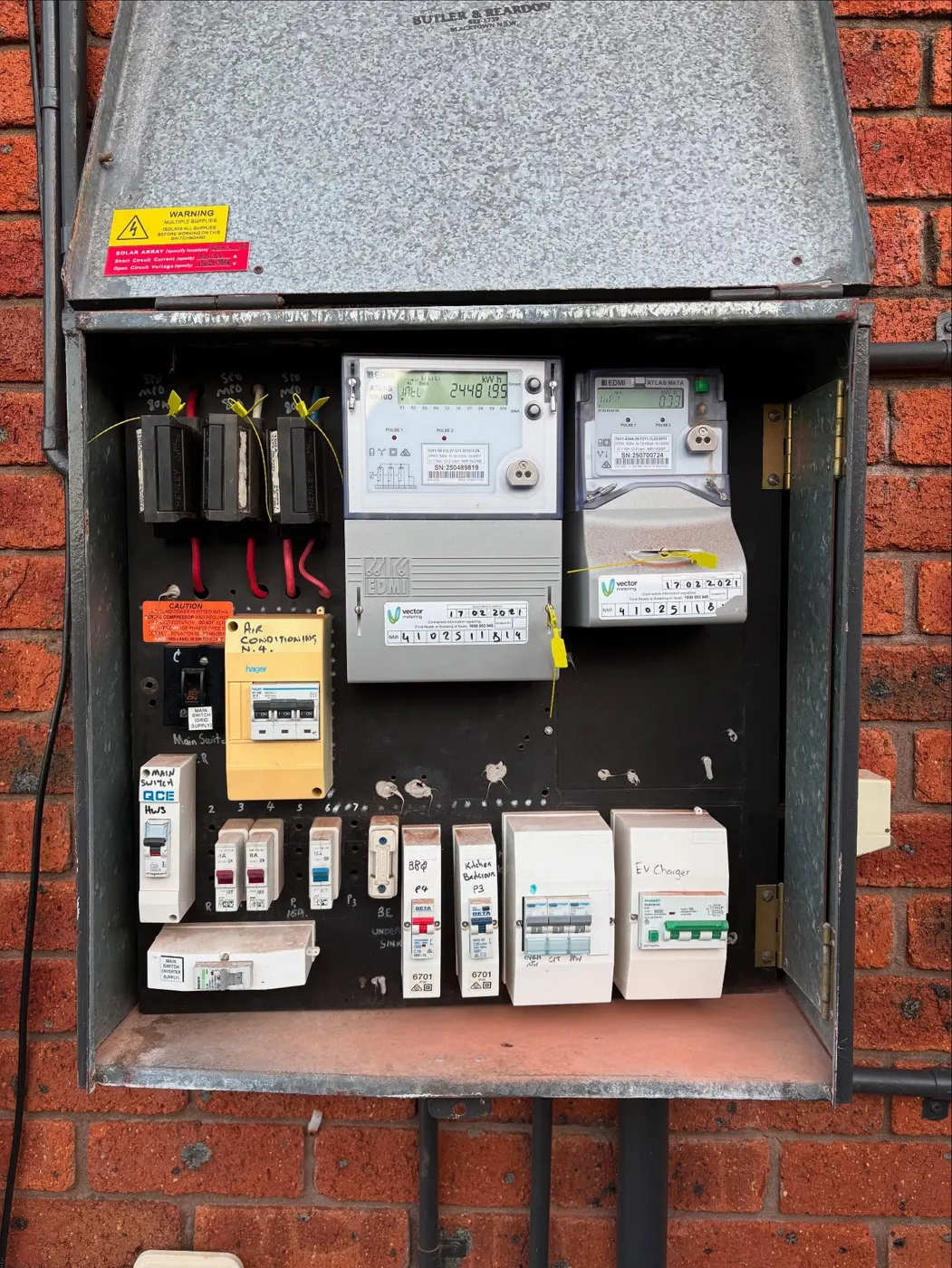
An older switchboard with legacy metering. Boards like this are common in homes that have never had an upgrade. Photo: DezzignProtect, CC BY-SA 4.0
Smoke alarms
NSW law says every home must have smoke alarms on every level, including owner-occupied homes and rentals, and they must meet Australian Standard AS 3786 (Fire and Rescue NSW, smoke alarm law).
The alarms must sit in hallways near bedrooms, or between the sleeping area and the rest of the house. Fire and Rescue NSW recommends going further, with an alarm in every bedroom. Hard-wired and interconnected alarms are electrical work, so ask an electrician to fit them. If you rent your home out, a faulty alarm must be repaired within 2 business days.
Air conditioning, hot water and solar
Air conditioning and refrigeration is specialist work in NSW, so the installer needs the right licence whatever the job costs (NSW Government, categories of work).
Some electricians install split systems themselves, and others bring in an air conditioning business and do only the wiring. Ask which, and get both licence numbers if two businesses are involved.
Air conditioning. Ask whether the quote includes a new dedicated circuit, the outdoor unit's bracket or slab, and the drain line.
Hot water. Replacing an electric hot water system needs a CCEW, even when the new unit is the same size as the old one.
Solar and batteries. From November 2026, new and upgraded home solar and battery systems must be commissioned through the NSW installer portal (NSW Government, electrical compliance). Ask the installer to confirm that step is done and to give you the paperwork.
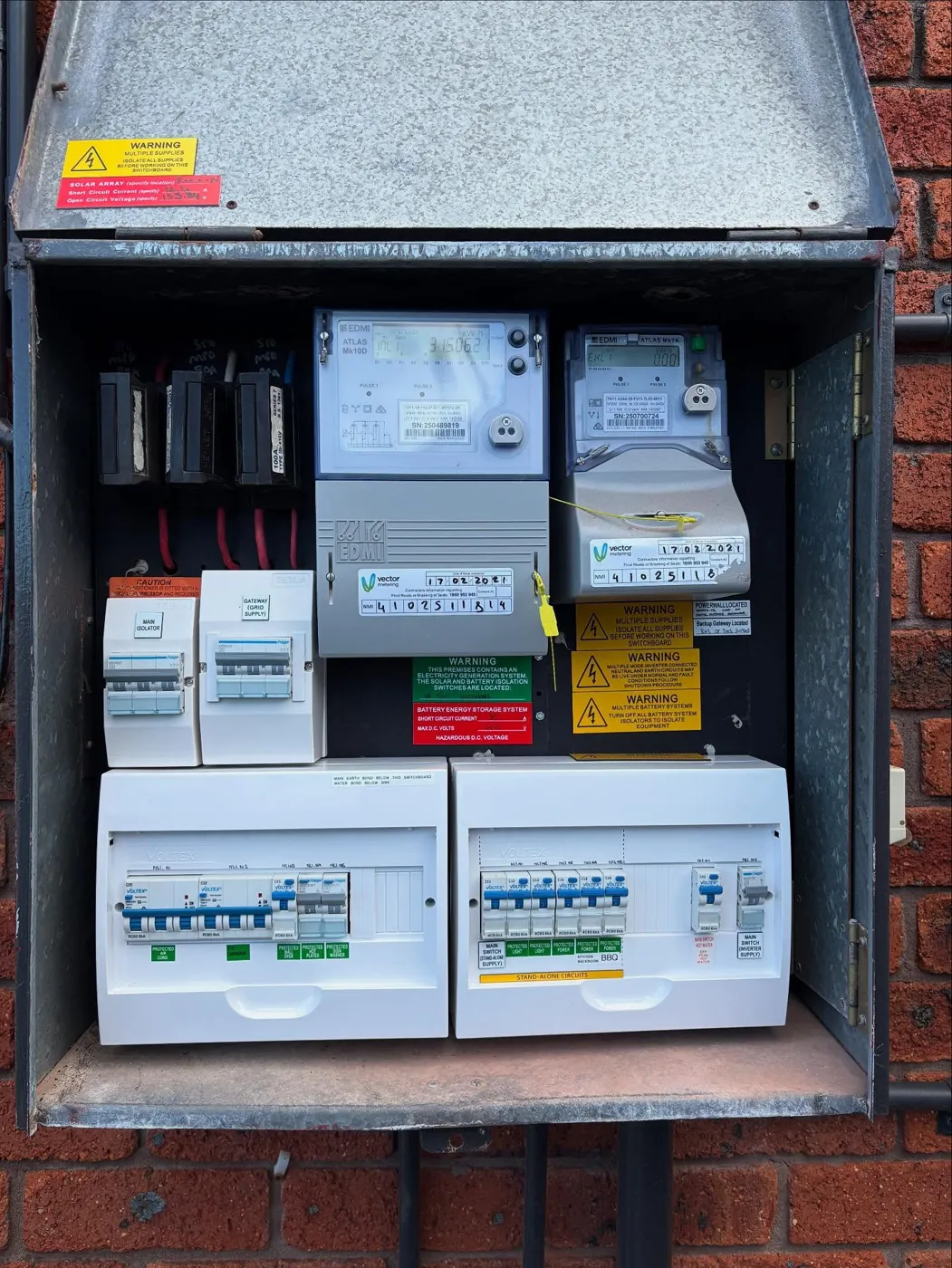
A modern meter box and switchboard with a home battery connected. Solar and battery work needs commissioning paperwork too. Photo: DezzignProtect, CC BY-SA 4.0
Power points, lighting and ceiling fans
Smaller electrical work is often priced per item plus a call-out fee. To get a fair price, list every job before the electrician comes, so they can do it in one visit:
each new power point and where it goes;
lights or downlights to replace, and the fittings you have bought;
ceiling fans, with the room and the ceiling height;
outside lights, sensor lights and outdoor power points.
Ask whether the price includes patching and painting after cables are run, because many electricians leave that to you.
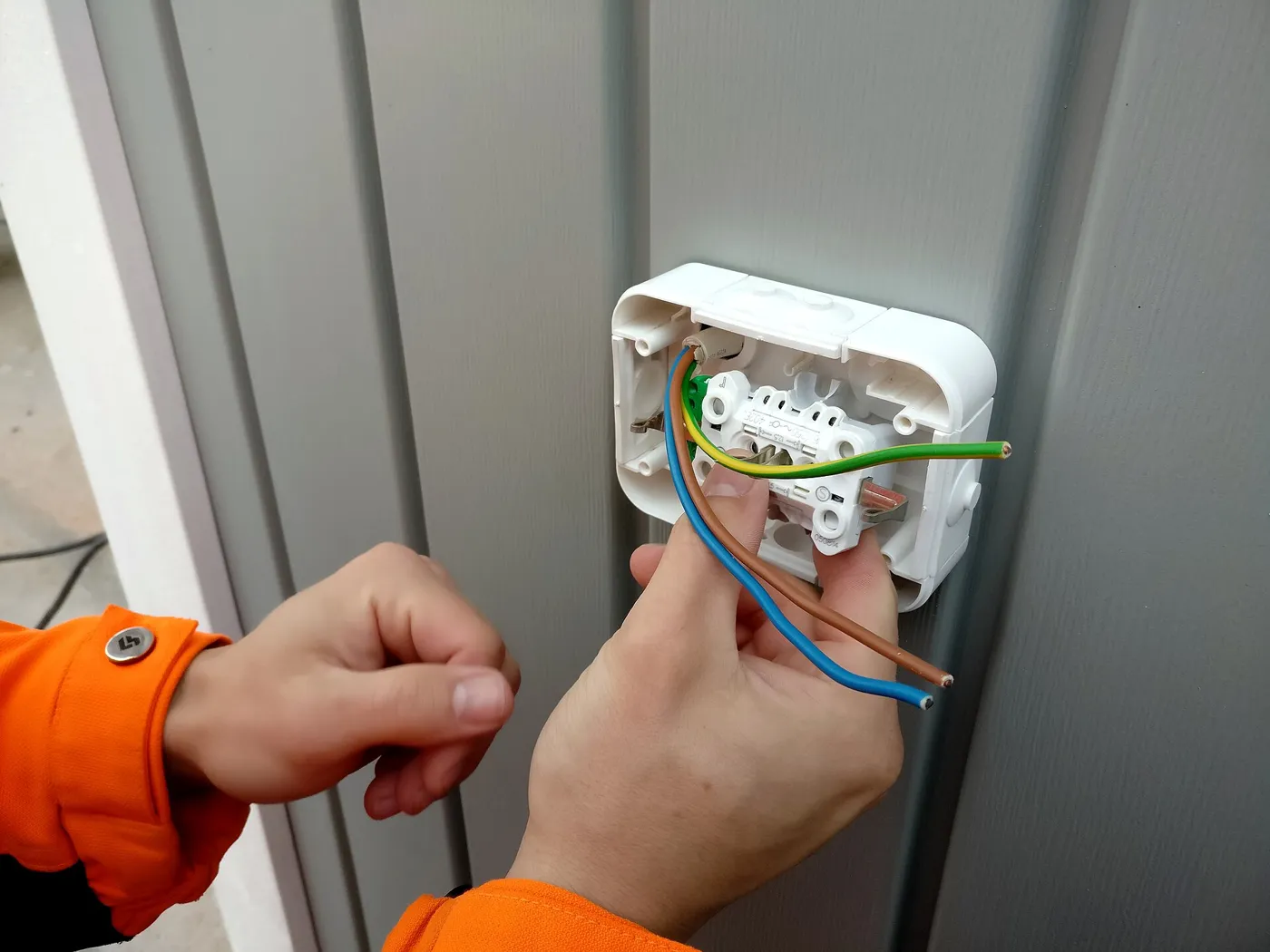
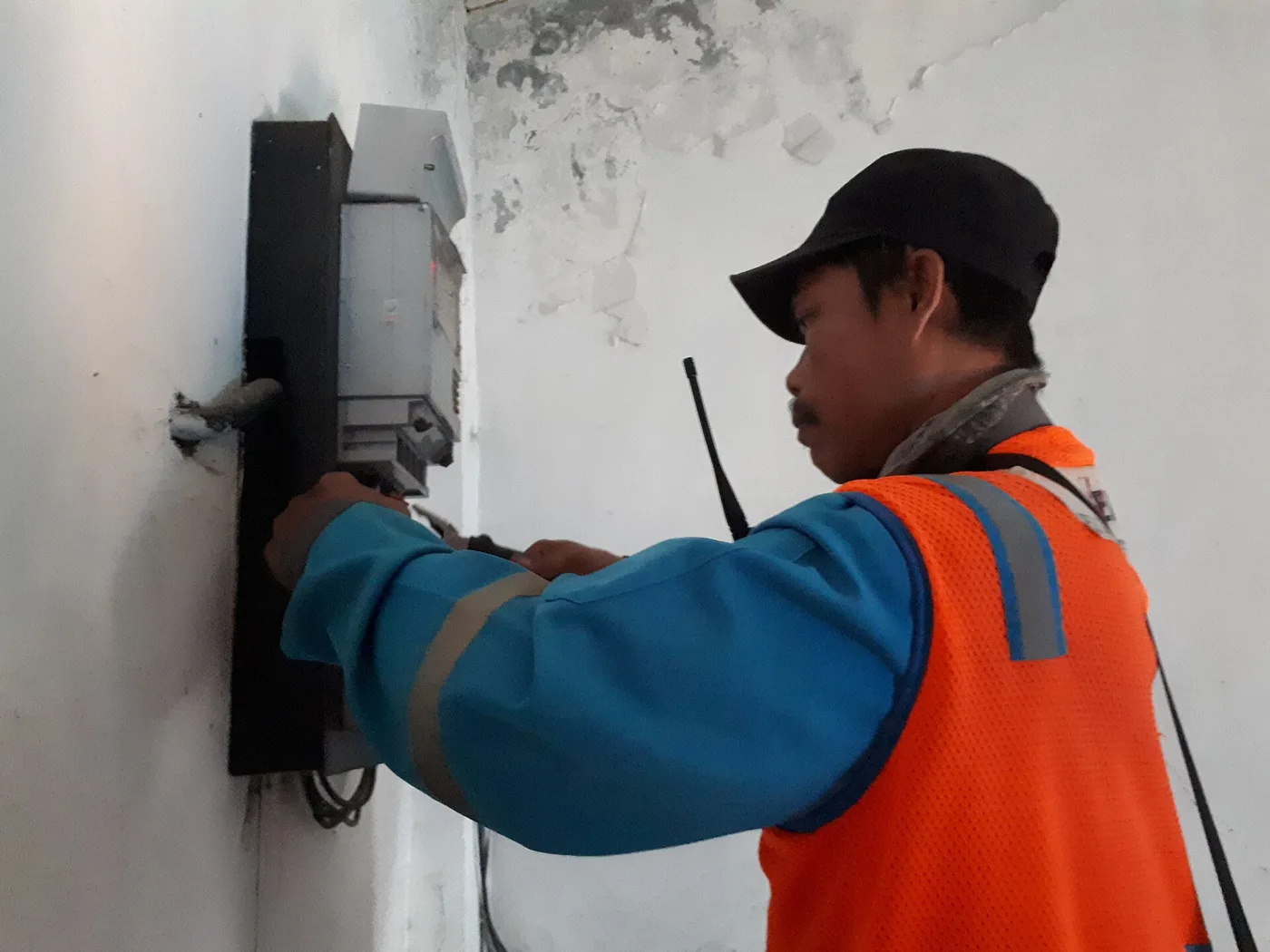
An electrician in hi-vis working on a wall-mounted meter box. Photo: Jeromi Mikhael, CC0
Electrical emergencies
If you see a fallen powerline, stay at least 8 metres away, about two car lengths, and call triple zero if anyone is in danger (Ausgrid, fallen powerlines).
For a fault inside your home, such as sparks, burning smells or a power point that is hot to touch, switch off at the main switch if it is safe to do so, then call an emergency electrician.
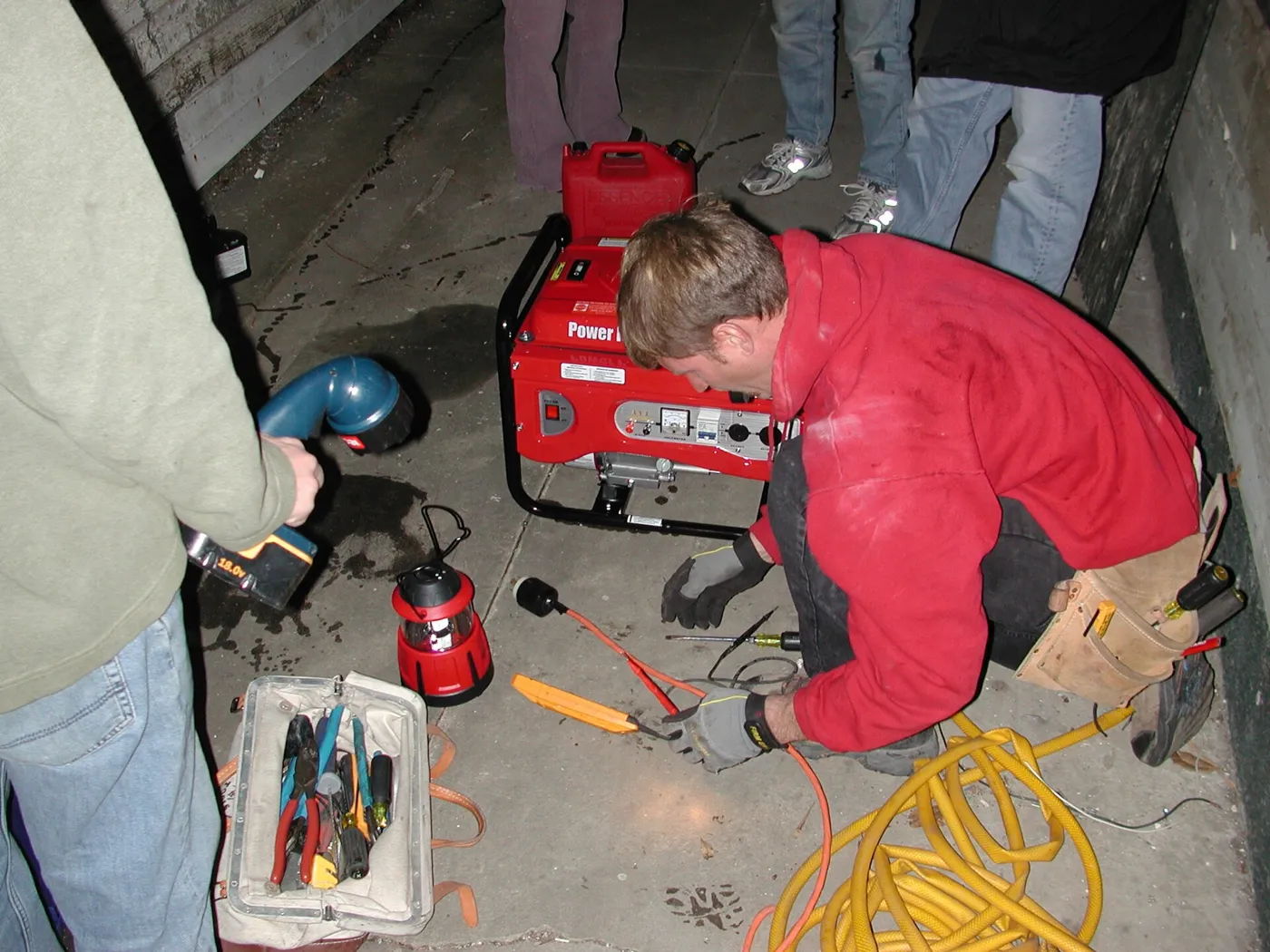
If the whole street is dark, the fault is probably on the network, not in your home, so check your electricity distributor's outage page before paying for an after-hours call-out. If you run a generator during an outage, plug appliances straight into it and never into a wall power point, because that can feed power back into the house wiring (NSW Government, electrical safety in the home).
Renovations and new builds
On a renovation or a new home, the electrician usually comes twice.
The first visit, the rough-in, runs cables and fits boxes while the walls and ceilings are open. The second, the fit-off, comes after the plasterer and painter, when the power points, switches and lights go on. Plan your layout before the rough-in, because moving a power point after the walls are lined costs far more than drawing it in the right place.
Ask the electrician to walk through the plan with you room by room. Think about where the bed, the TV, the desk and the kitchen appliances will sit, and where you will want outdoor power, garden lights and a charger for an electric car. If your builder is hiring the electrician, you can still ask for the licence number and the CCEW.
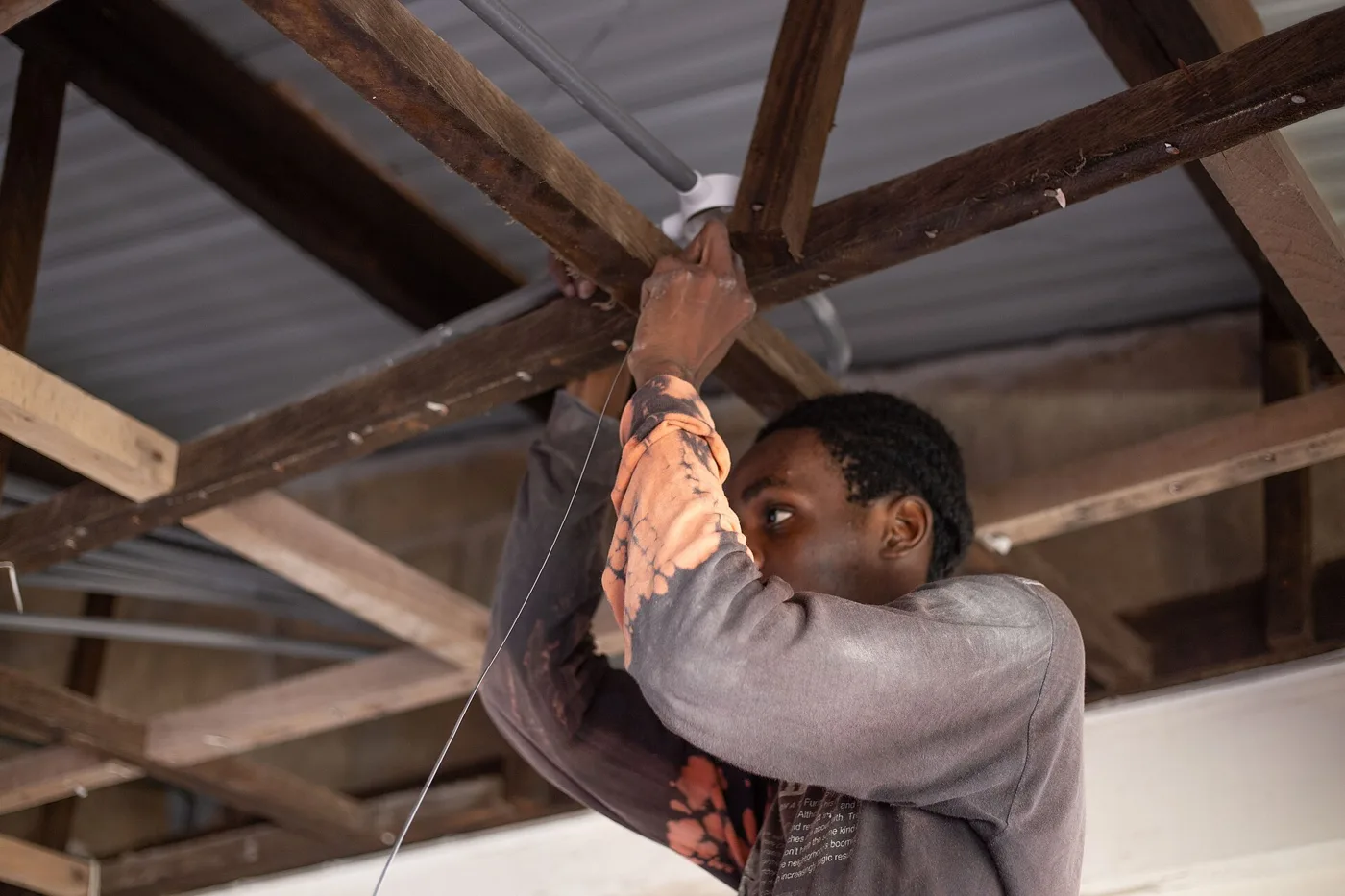
Cable going in through an open ceiling before it is lined. This is the rough-in stage of a renovation. Photo: Amuzujoe, CC BY-SA 4.0
Electric car chargers
A wall charger for an electric car needs its own circuit, and an older switchboard may need work before one can be added. Ask the electrician to check whether your supply and board can carry the extra load, where the charger will go, and whether the quote includes the cable run from the board to the garage or carport. Like any new circuit, a charger needs a CCEW.
Buying or selling a home
If you are buying an older home in Maitland, ask for a licensed electrician's inspection as well as the usual building and pest report. It can pick up old wiring, missing safety switches and smoke alarms that are past their date. If you are selling, keep every CCEW from past work together, because buyers and their inspectors often ask what has been done.
Some of the electricians in this list work mostly in homes. Others do commercial and industrial work across the Hunter Valley and only take on some household jobs.
Both hold the same kind of licence, but a business set up for commercial work may not be the cheapest for a single ceiling fan, and a domestic electrician may not have the gear for a large shop fit-out. Ask what share of their work is like yours.
How electricians price their work
Electrical services in Maitland are usually priced one of three ways, and it helps to know which one you are being quoted:
Call-out fee plus hourly rate. Common for fault finding, where nobody knows how long the job will take until the electrician starts testing. Ask for the rate and how it is charged after the first hour.
Fixed price per item. Common for power points, downlights, smoke alarms and ceiling fans. Check whether the price changes if the cable run is long or the roof space is tight.
Fixed price for the whole job. Common for switchboard upgrades, rewires, air conditioning and new builds. This is the easiest kind of quote to compare, as long as each one lists the same work.
Whichever way it is priced, ask for the final invoice to list the work done and the parts used.
Contracts and deposits
Electrical work needs a licence at any price, but the contract rules turn on the job's size.
Any home building job over $5,000 including GST needs a written contract from the business, and the deposit can be no more than 10 per cent of the price (NSW Government, contracts). If a big job, such as a rewire, is over $20,000, ask to see the home building compensation certificate before you pay a deposit.
Check the licence before you pay anything
The NSW Government's free check shows whether a licence is current and what work it covers.
The licence number and the exact business name it is held in.
Each item of work, listed separately, with the parts named.
Whether the price includes testing, the CCEW and any supply authority fees.
Who patches walls and ceilings after cabling.
How long the power will be off, and when.
Questions to ask an electrician on the phone
Do you cover my suburb, or the wider Maitland and Hunter Valley area?
Do you charge a call-out fee, and is it part of the job price?
Will you email me the CCEW when the job is done?
Will you do the work yourself, or send an apprentice with a licensed supervisor?
What to do next. Shortlist three electricians from the list, check each licence, then compare written quotes.
Electrician Maitland: common questions
How did you pick these electricians?
We took the Google Maps results for "electrician maitland" on 29 October 2026, kept businesses with 10 or more reviews, and ranked them on a rating that weighs in how many reviews it rests on.
Does a electrician in NSW need a licence?
It needs a licence whatever the job costs. You can check any licence for free with Service NSW.
How much deposit can a electrician ask for?
Under NSW home building law the most you can be asked for is 10 per cent of the contract price.
Can a electrician pay to be on this list?
No. Nobody pays to be listed or ranked. The order comes only from Google reviews.
Short version. Start with the ten best-reviewed electricians above, check the licence and get written quotes.
Need a different trade?
Every list on the register is built the same way, from Google reviews.